



01
Numb and Comfortable
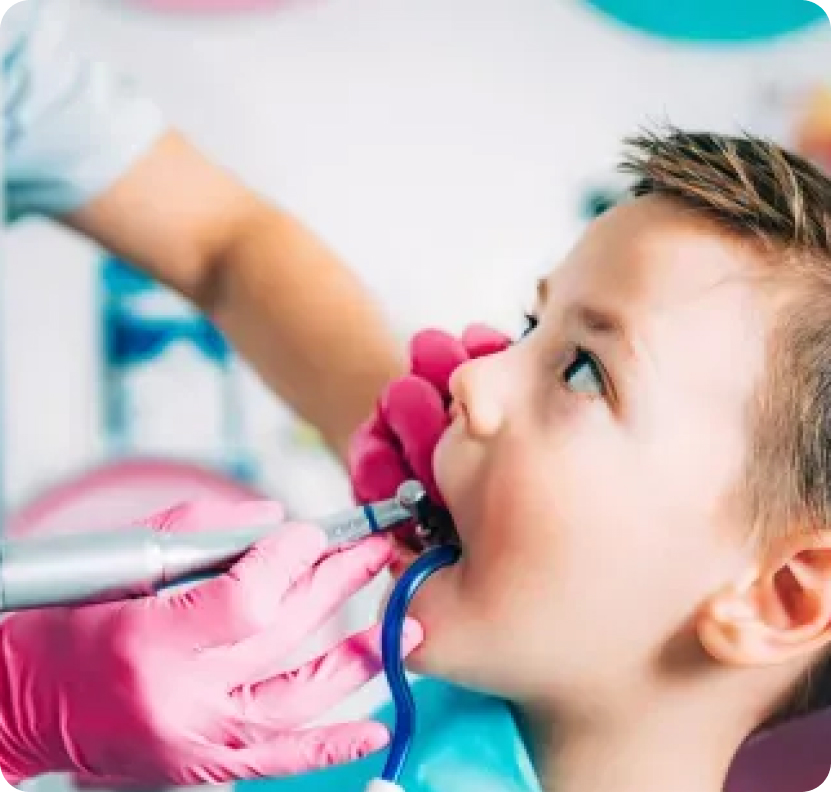
The tooth is numbed first — our SOAN system delivers the anesthetic slowly and gently — and nitrous oxide is there if nerves need extra help.
Tooth-colored repairs that disappear into growing smiles.
A dental filling repairs a cavity by removing the decay and rebuilding the tooth with a tooth-colored material that blends right in. Dr. Jason Brock, a board-certified pediatric dentist, places composite fillings for kids in Clear Lake — …usually in one short, calm visit.
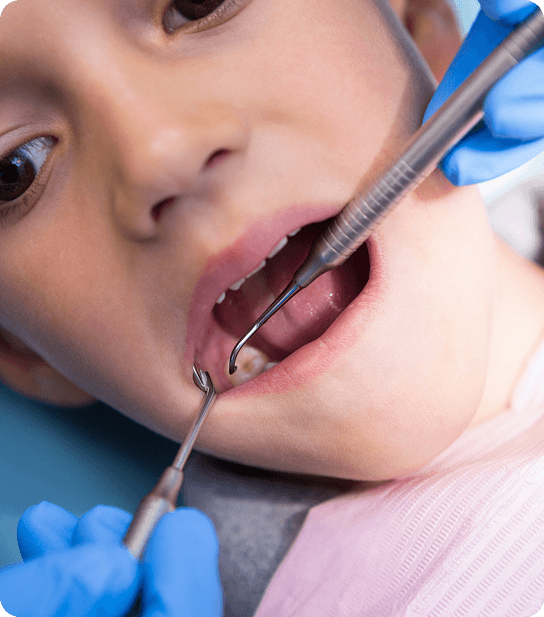
A cavity is decay that has broken through the enamel, and it doesn't stop on its own — it keeps working deeper into the tooth. A filling ends that. We remove the decayed part, then rebuild and seal the tooth so it's solid again — in a toddler's baby tooth or a teenager's permanent molar.
Every filling we place is tooth-colored. We use composite and other esthetic materials matched to your child's tooth, so once it's done, you'll have a hard time pointing to which tooth it was. Fillings are one of the most common treatments in pediatric dentistry, and for most cavities, they're all a tooth needs.

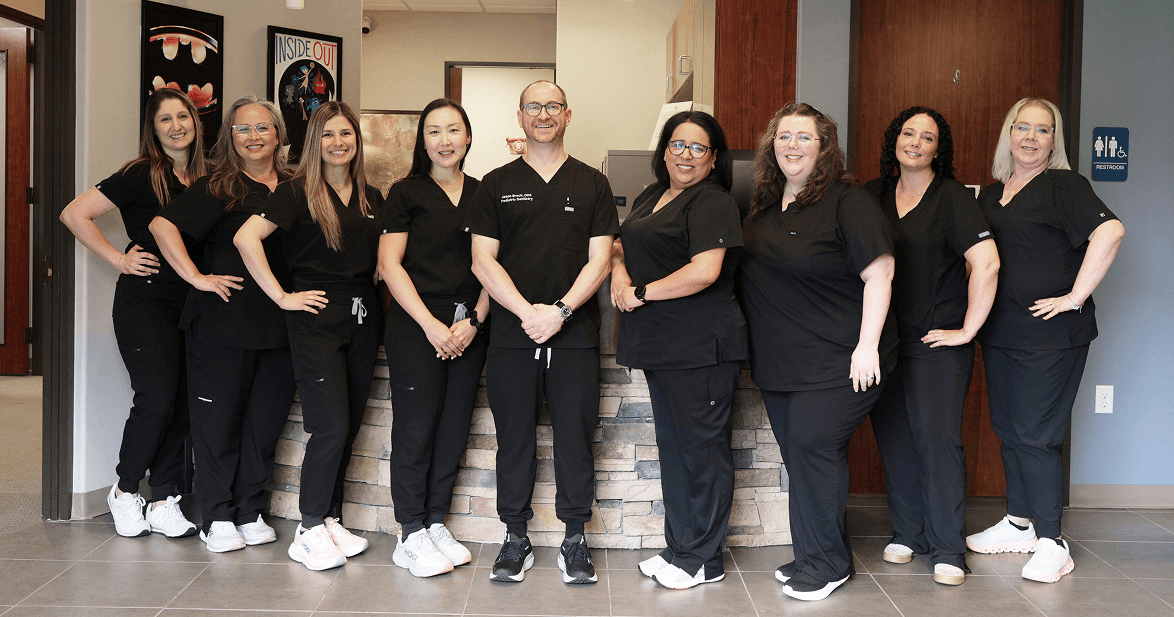
Teen visits are led by Dr. Jason Brock, DDS, Diplomate, American Board of Pediatric Dentistry, who talks to teens directly: their questions, their answers, their buy-in. Dr. Brock completed his residency in pediatric dentistry at UT Houston School of Dentistry and is listed as a dental provider with Texas Children's Hospital.
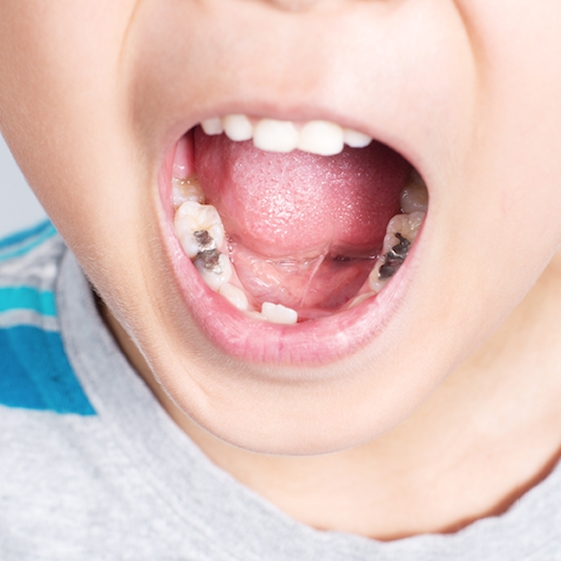
Some cavities announce themselves: a dark spot, a hole your child's tongue keeps finding, a wince at something cold or sweet. Plenty don't — early decay is often invisible from the outside, which is why exams and digital X-rays matter. When decay has broken through the enamel into a small or medium cavity, a filling is usually the right fix.
Not every spot needs drilling, though. Very early decay can sometimes be stopped in place with silver diamine fluoride or strengthened with fluoride and watched. And when a cavity has grown too large for a filling to hold, a crown protects the whole tooth instead. The exam tells us which situation your child's tooth is in — and we'll show you, not just tell you.



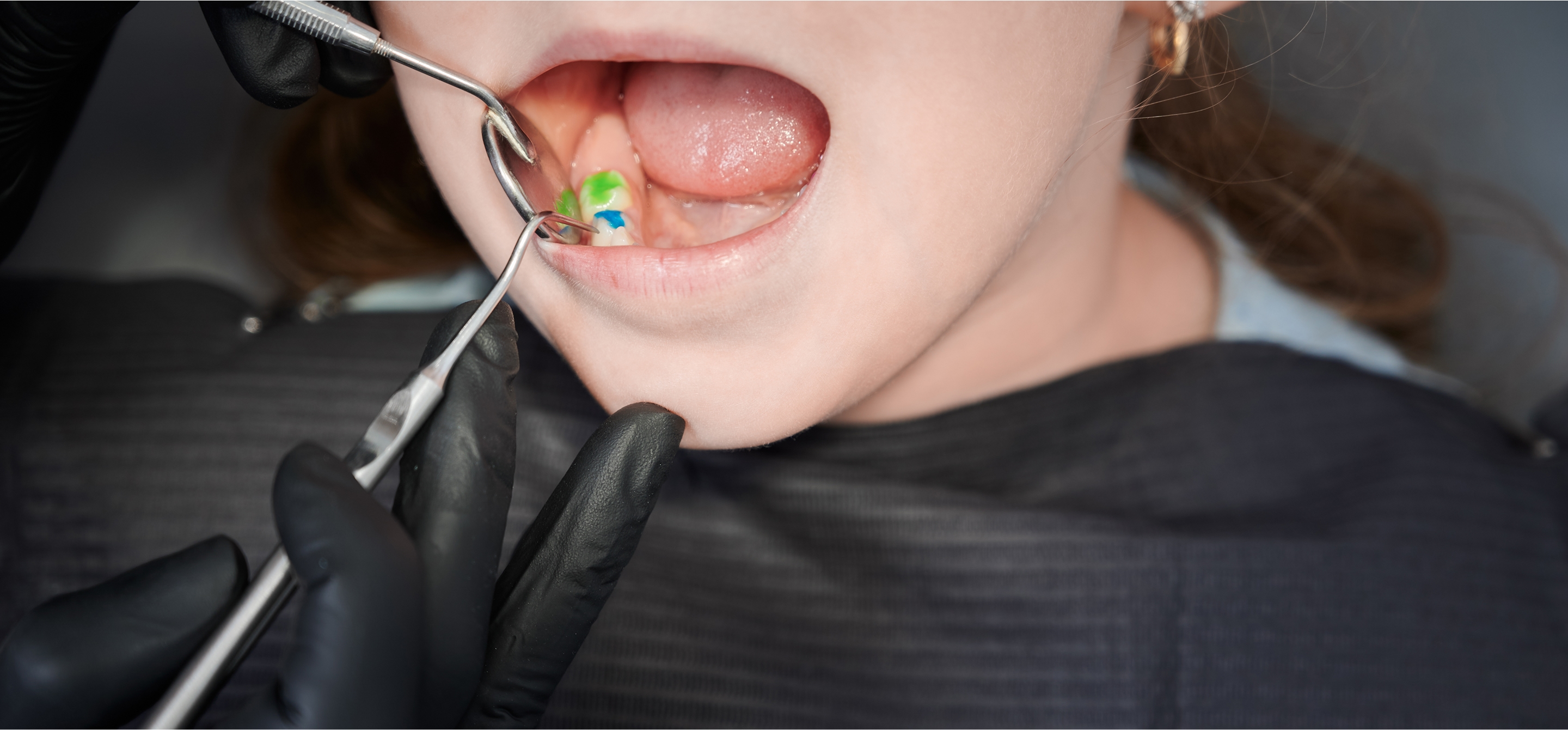
Composite fillings bond directly to the tooth, get shade-matched so they disappear into the smile, and harden instantly under a curing light — no waiting for anything to set on the drive home. They work on baby teeth and permanent teeth alike.
We're fussy about the small stuff, because the small stuff is what makes a filling last. The tooth stays dry and isolated while we work, the composite goes in carefully, and the bite gets checked before your child leaves the chair. Honest expectations, too: fillings are strong for everyday chewing, but no filling makes a tooth invincible — so we look at every one at your child's regular checkups.
Usually, yes — and here's the case, honestly made. Baby teeth aren't placeholders. They hold the space that guides permanent teeth into position, and some baby molars are on duty until age 11 or 12. A cavity never stops on its own: left alone it grows deeper, starts to hurt, can reach the nerve, and can spread to the tooth next door — so what starts as a quick filling can grow into a crown, pulp treatment, or an extraction. Treated early, the problem ends there. That said, not every spot needs drilling; very early decay can sometimes be stopped with silver diamine fluoride instead, and the exam tells us which situation your child is in.
Start here: this is common, and it isn't a parenting verdict. Kids get cavities for overlapping reasons — deep grooves in back teeth that trap food, constant sipping and sticky snacks (which do more quiet damage than the occasional dessert), brushing skills that are still catching up, and enamel that simply varies from child to child. The fix is layers, not lectures: regular cleanings, sealants over those grooves, fluoride to strengthen enamel, and a couple of habit tweaks we'll help you pick. Ask us at your child's next visit — we'll look at what's driving it and build the plan together.
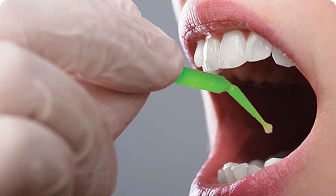
Very early decay can sometimes be stopped in place — no drilling involved.
Learn About SDF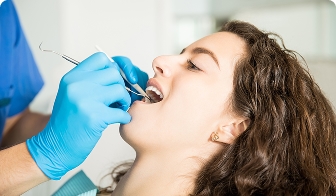
The standard fix for small and medium cavities: decay out, tooth rebuilt, usually in one visit.
Learn About Cleanings
When decay has claimed too much for a filling to hold, a crown covers and protects the whole tooth.
Learn About Crowns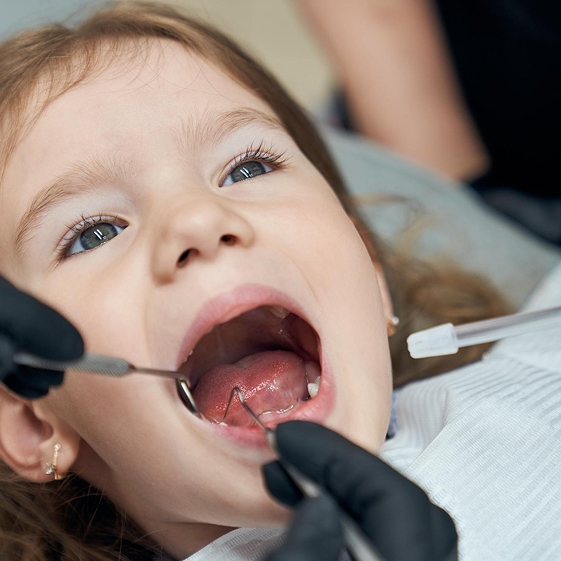
Maybe it's nothing — or maybe it's the start of something. That's exactly what a quick look settles, and the earlier we look, the smaller the fix tends to be. Bring your child in, and we'll tell you plainly whether it's something to treat, something to stop with SDF, or something to simply watch.

01
Numb and Comfortable
The tooth is numbed first — our SOAN system delivers the anesthetic slowly and gently — and nitrous oxide is there if nerves need extra help.
02
Decay Out
Dr. Brock removes the decayed part of the tooth and keeps the area clean, dry, and isolated — the unglamorous step that makes fillings last.
03
Rebuild and Cure
Tooth-colored composite goes in, shaped to the tooth and shade-matched, then hardened instantly with a curing light.
04
Check the Bite
A quick bite check and polish, and your child is done — most fillings are completed in a single visit.

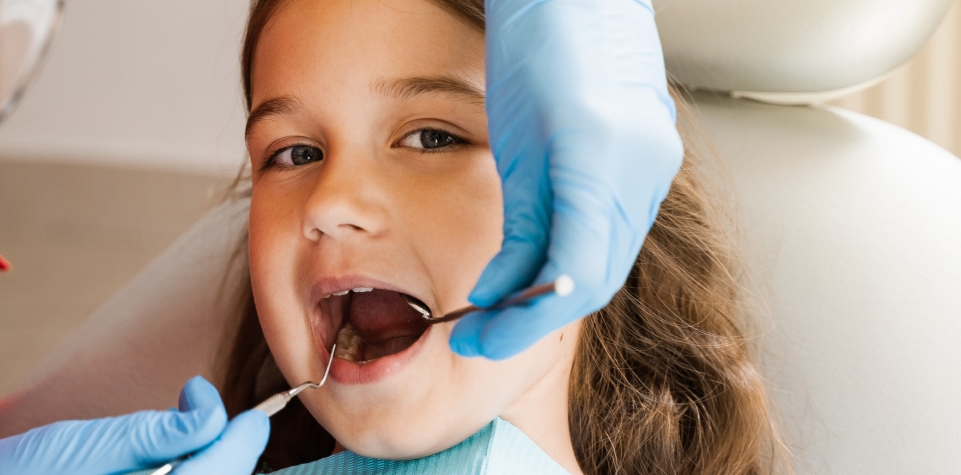
The numbness hangs around for a few hours, so supervise snacks
until it fades — kids love to chew a numb lip, and that's
the main thing to prevent. Once feeling returns, normal eating
is fine; the filling is already fully set. Some mild sensitivity to cold or chewing for a few days is
normal, and brushing and flossing carry on as usual.
Call us if the bite feels "too tall," if sensitivity grows instead of fading, or if the filling ever feels loose or chips — none of those are emergencies, but each one deserves a look.
It depends on a few honest variables: how many teeth need treatment, how large each cavity is and which tooth it's on, and whether sedation is part of the plan. That's why the exam comes first — it turns a guess into a real estimate, and you'll have that estimate before any treatment starts.
We're in-network with many major PPO plans and verify your benefits before your visit, financing is available, and families without insurance can look at our membership plan. The full picture lives on our insurance and payment page.


Pediatric Dentist • 4.9 • 211 reviews

2 days ago
Dr Brock and staff are just fabulous, honest and efficient!
2 weeks ago
Both my boys have been going to Dr. Brock for many years. He is very thorough and his staff is amazing. Definitely recommend Big Picture Dentistry.
2 weeks ago
I've been going here for years, they are incredibly friendly and informative.
Our office sits at
17150 El Camino Real, Houston, TX 77058
— on the El Camino Real corridor in the Clear Lake area, near NASA
Parkway and Bay Area Boulevard, with easy ground-floor access.
We're open Monday through Friday from 7:30 AM to 4:30 PM, which
means a filling can happen before school instead of during it.
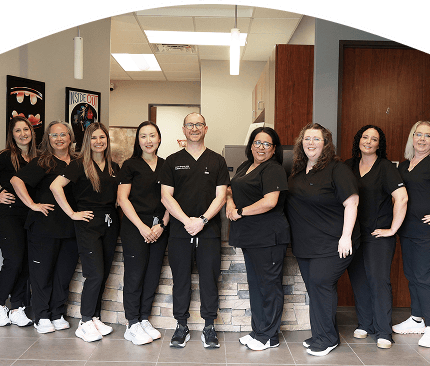
Dr. Jason Brock and the team would rather
fix one small cavity today than a big one next year — that's the
whole philosophy.
It grows. Decay moves through the enamel into the softer layer underneath (called dentin), and eventually toward the nerve — which is when toothaches, infection, and swelling show up. A cavity that would have taken one small filling can end up needing a crown, pulp treatment, or an extraction. Early is easier on your child, your schedule, and your wallet.