


01
Numb and Settled
The tooth is numbed first — our SOAN system delivers the anesthetic slowly and gently — and for anxious kids or bigger treatment, nitrous oxide, oral, and IV sedation are open conversations.
When a filling isn't enough, a crown brings the tooth back.
A dental crown is a protective cap that covers a damaged baby or permanent tooth, restoring its shape and strength when a filling isn't enough. Dr. Jason Brock, a board-certified pediatric dentist, places kids crowns in Clear Lake — fitted and completed in a single visit.
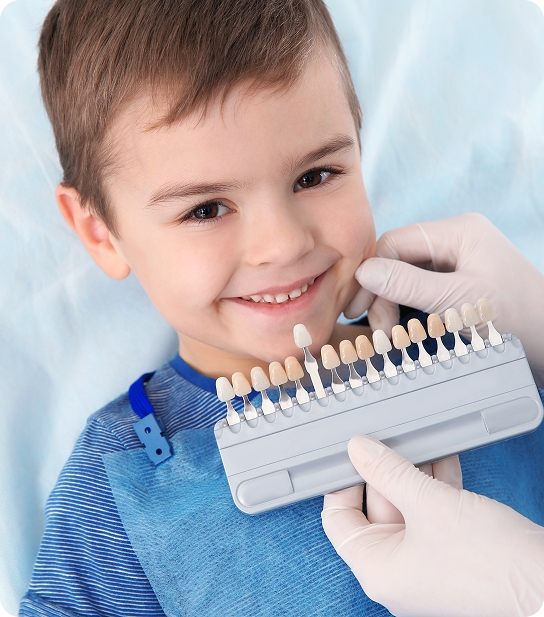
Some cavities and fractures go past the point where a filling can help. When too much of the tooth is gone, there's nothing solid left for a filling to anchor to — so instead of patching one surface, a crown covers the entire tooth in a protective cap, restoring its shape, strength, and chewing power.
We place crowns on baby teeth and permanent teeth alike, using two proven types: stainless-steel crowns and esthetic white crowns. Both do the same fundamental job — protect what's left of the tooth and get it back to work.

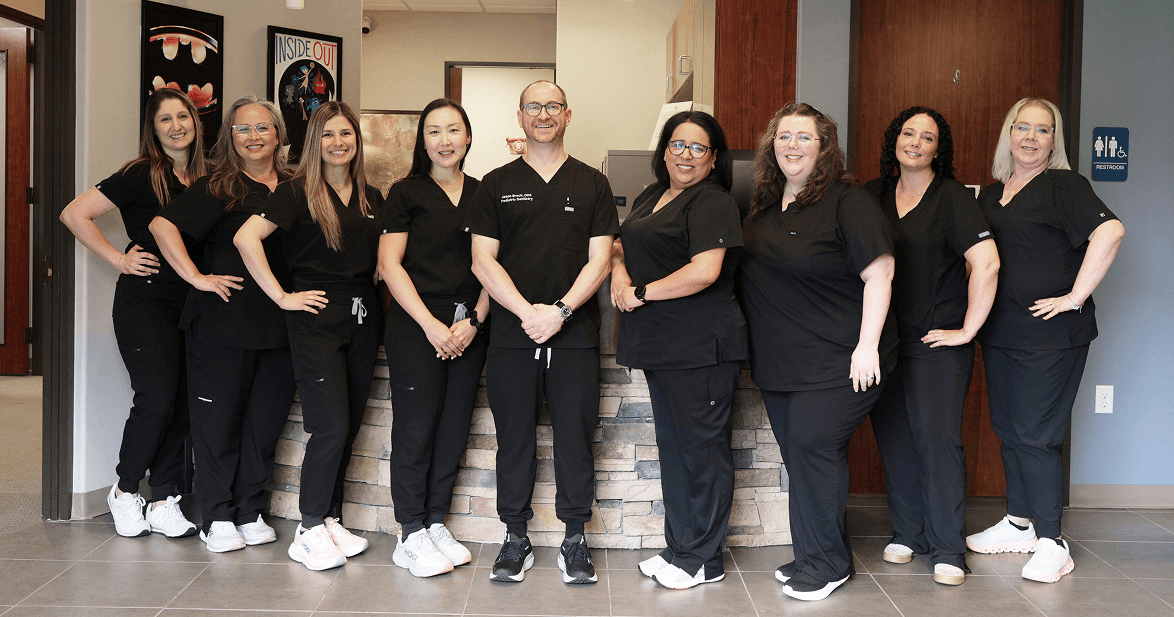
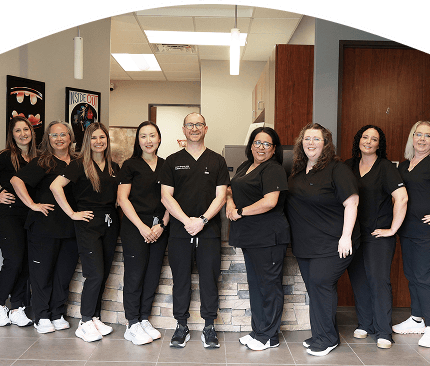
Teen visits are led by Dr. Jason Brock, DDS, Diplomate, American Board of Pediatric Dentistry, who talks to teens directly: their questions, their answers, their buy-in. Dr. Brock completed his residency in pediatric dentistry at UT Houston School of Dentistry and is listed as a dental provider with Texas Children's Hospital.
A crown usually enters the conversation when a cavity is too large for a filling, a tooth has fractured, enamel didn't form properly in the first place, or a tooth has just had pulp treatment and needs full protection afterward. Kids with a history of heavy decay sometimes do better with crowns too, because a crown seals the whole tooth rather than one surface.
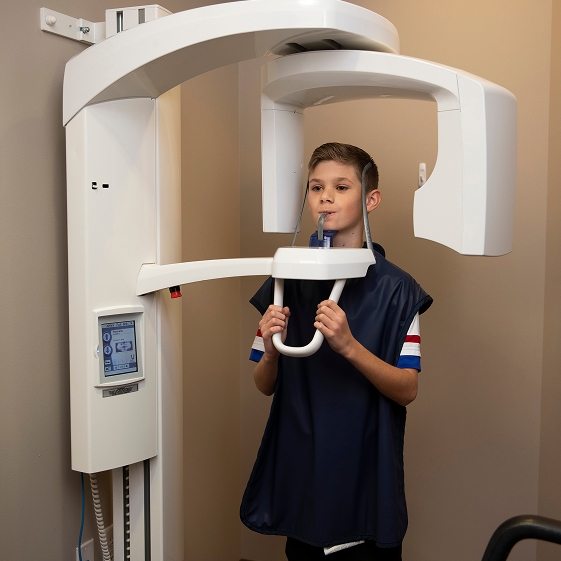
It isn't the answer to everything. Smaller cavities usually just need a filling, and some early decay can be stopped without any drilling using silver diamine fluoride. We start with an exam and digital X-rays — which use up to 90% less radiation than old-style film — then show you what we found and walk through the why.


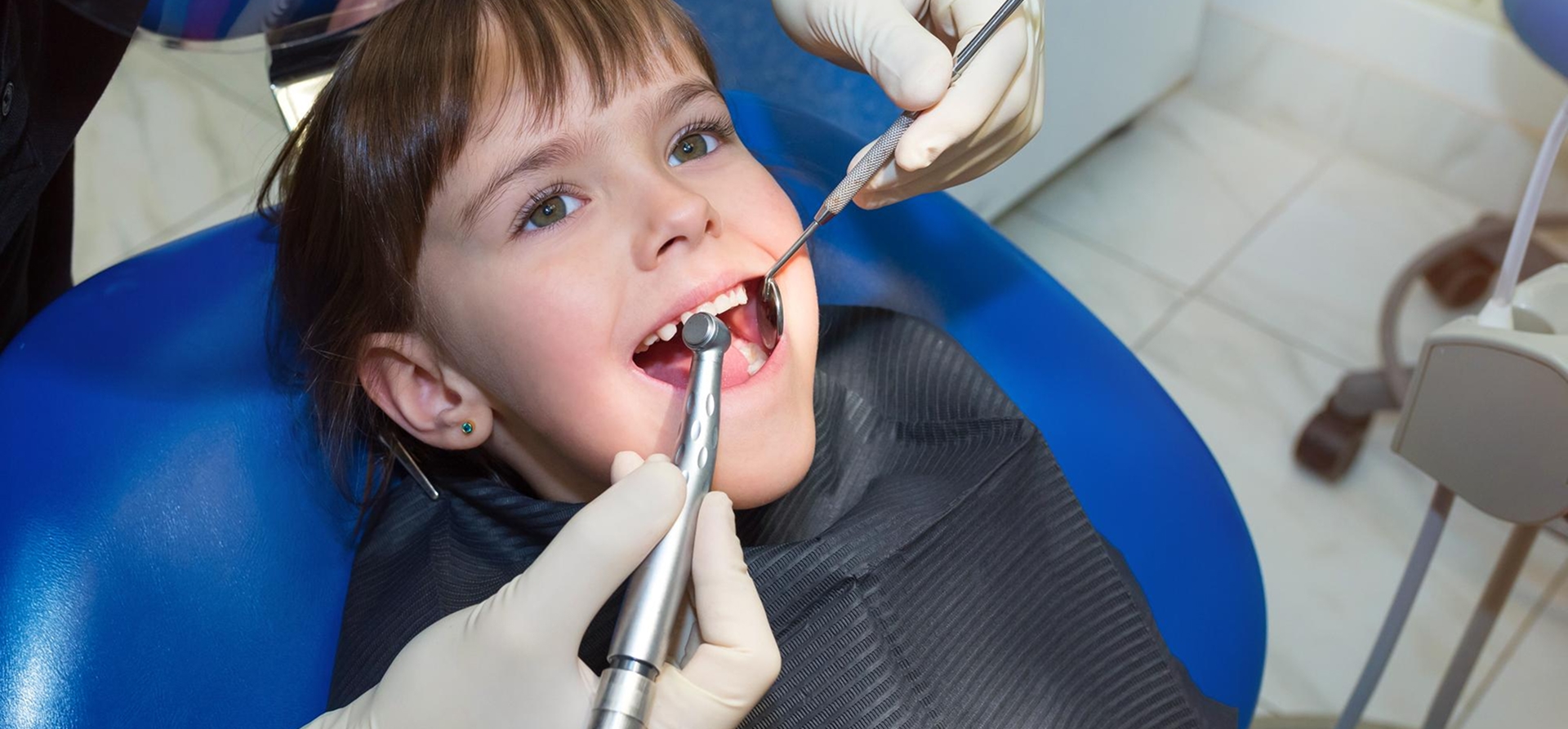
If you've had a crown yourself, forget most of what you remember. Adult crowns usually mean impressions, a temporary crown, a lab wait, and a second appointment. Pediatric crowns work differently: they come precision-made in a graded range of sizes, and Dr. Brock selects the right one, adapts it to your child's tooth, and cements it in place — all in the same visit. No temporaries, and no coming back to finish the job.
Two families of crowns cover nearly every situation: stainless-steel crowns, the silver workhorses that stand up to years of chewing, and esthetic white crowns that blend in where a smile shows. Which one fits your child's tooth is a conversation we'll have with the X-ray in front of you.
Because the tooth still has years of work left. Some baby molars stay on duty until age 11 or 12, chewing every meal along the way. When decay or a fracture takes out too much of one, a filling has nothing solid to grip — it would crack or fall out under normal chewing. A crown solves that by covering the whole tooth, so your child keeps using it comfortably until it's ready to fall out on its own, crown and all. And because decay never stops on its own, capping a badly damaged tooth now is what prevents the toothache, infection, or bigger treatment later.
Sometimes pulling is the right call — when a tooth truly can't be saved, we'll say so plainly and treat extraction as the careful last resort it should be. But an empty space comes with its own bill. Neighboring teeth start drifting into the gap, the permanent tooth underneath can lose its parking spot, and your child often ends up needing a space maintainer to hold the room open anyway. Crowning a fixable tooth keeps the natural space-holder right where it is — usually the simpler path, not the fancier one.
Both are fitted and cemented in a single visit — the real differences are where they're used, how they look, and how they wear.
| Stainless-Steel Crowns | Esthetic White Crowns |
|---|---|
| Silver-colored | Tooth-colored, matched to the smile |
| Extremely durable under heavy chewing | Strong, and made for the spots where looks matter |
| The usual choice for back teeth (molars), where force is highest and the crown barely shows | The usual choice for front teeth and visible areas |
| A decades-long workhorse of pediatric dentistry |
Neither wins every time. Dr. Brock recommends by tooth — its location, how much structure is left, and what matters to you — and explains the trade-offs before anything happens.
Neither wins every time. Dr. Brock recommends by tooth — its location, how much structure is left, and what matters to you — and explains the trade-offs before anything happens.
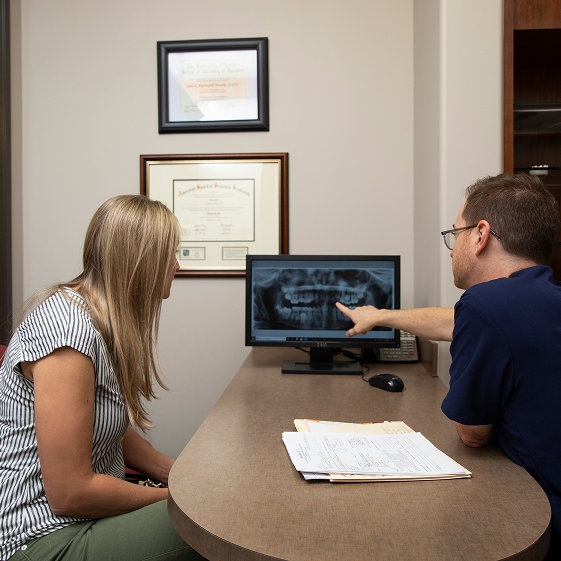
Take a breath — this is fixable, and you don't have to decide blind. Bring your child in, or bring us the X-rays you already have, and we'll show you exactly what's going on, what the options are, and what each one involves. Second opinions are welcome here, no hard feelings attached.

01
Numb and Settled
The tooth is numbed first — our SOAN system delivers the anesthetic slowly and gently — and for anxious kids or bigger treatment, nitrous oxide, oral, and IV sedation are open conversations.
02
Clear the Decay
Dr. Brock removes the damaged part of the tooth and shapes what remains so the crown can seat properly.
03
Size and Fit
He selects the right crown from a graded range of sizes and adapts it until the fit is snug and the bite is right.
04
Cement and Check
The crown is cemented in place, the bite gets a final check and polish, and your child is done.

Expect a few hours of numbness, so supervise snacks until it fades — a numb lip is very chewable, and that's the one real hazard. Mild gum tenderness or sensitivity for a few days is normal. After that, the crown lives like a regular tooth: brush it, floss it, bring it to checkups. Its two enemies are sticky candy and ice-chewing, so keep those rare. On a baby tooth, the crown stays until the tooth falls out naturally — and leaves with it.
If a crown ever feels loose or comes off, save it if you can and give us a call — we'll get your child seen quickly.
It depends on a few honest variables: the type of crown, which tooth it's on, whether the tooth needs pulp treatment first, and whether sedation is part of the plan. That's why the exam comes first — it turns a guess into a real estimate, and you'll have that estimate before any treatment starts.
We're in-network with many major PPO plans and verify your benefits before your visit, financing is available, and families without insurance can look at our membership plan. The full picture lives on our insurance and payment page.

Pediatric Dentist • 4.9 • 211 reviews

2 days ago
Dr Brock and staff are just fabulous, honest and efficient!
2 weeks ago
Both my boys have been going to Dr. Brock for many years. He is very thorough and his staff is amazing. Definitely recommend Big Picture Dentistry.
2 weeks ago
I've been going here for years, they are incredibly friendly and informative.
Our office sits at 17150 El Camino Real, Houston, TX 77058 — on the El Camino Real corridor in the Clear Lake area, near NASA Parkway and Bay Area Boulevard, with easy ground-floor access. We schedule Monday through Friday until 4:30pm, early enough that a crown visit doesn't have to swallow the school day.
Dr. Jason Brock would always rather protect a tooth than replace a gap — that's the philosophy behind every crown we place.
The tooth is fully numbed first, and during the visit most kids feel pressure rather than pain. Some soreness afterward is normal and short-lived. If your child is anxious, sedation options exist for exactly this reason — tell us what you're worried about and we'll plan around it.