
01
The Conversation
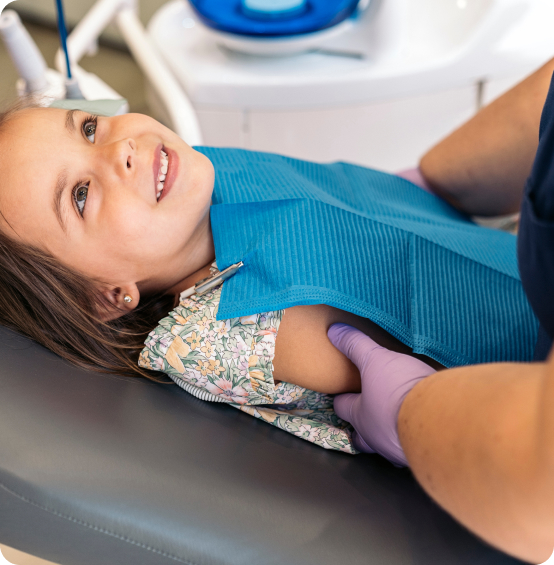
Your observations first: what you've noticed, habits past and present, and any family history of crowding or bite quirks.
A focused, no-pressure look at how the bite is coming together.
An orthodontic screening is a focused evaluation of how your child's bite, jaws, and tooth alignment are developing — separate from a routine checkup, and deeper. Dr. Jason Brock, a board-certified pediatric dentist in Clear Lake, recommends a first screening around age 7, and most end in reassurance.
A screening reads four things at once: how the bite comes together, how crowded or spaced the arriving teeth are, whether eruption is tracking with your child's age, and how the jaws are growing. The reason timing matters is the reason early looks exist at all — while a child is growing, the picture is still being drawn, and problems read earliest exactly when they're most workable. That's the whole idea behind what dentists call interceptive orthodontics: a small, well-timed move during growth can sometimes spare a bigger one later.
One more thing worth saying plainly: nobody here sells braces, so the read you get is just the read. Whatever the screening finds — or doesn't — the recommendation has nothing riding on it except your child's bite.

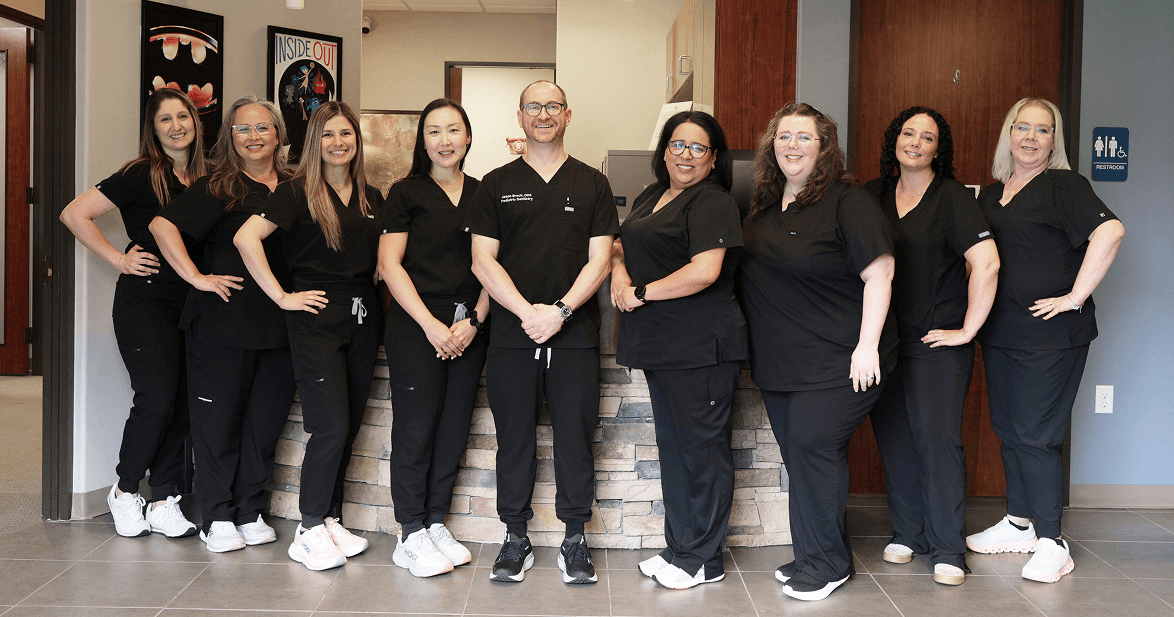
Screenings are performed by Dr. Jason Brock, DDS — Diplomate, American Board of Pediatric Dentistry — who watches bites develop all day, every day, and will show you exactly what he sees in yours.
The screening runs a focused checklist: crowding as permanent teeth land, gaps that aren't closing on schedule, crossbites, front teeth that jut or don't meet, bites that sit off-center, and eruption that's running early, late, or off-path. We also read the fingerprints of habits — the slow-motion pressure a persistent thumb or pacifier leaves on a growing bite — and flag baby teeth that left too early or are overstaying their welcome.
None of it is a verdict by itself. Each finding gets weighed against your child's age and growth stage, because a crowded seven-year-old and a crowded ten-year-old are two different conversations — and sorting that is precisely what the screening is for.

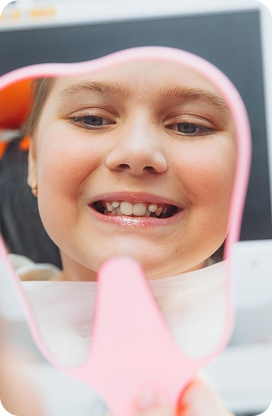

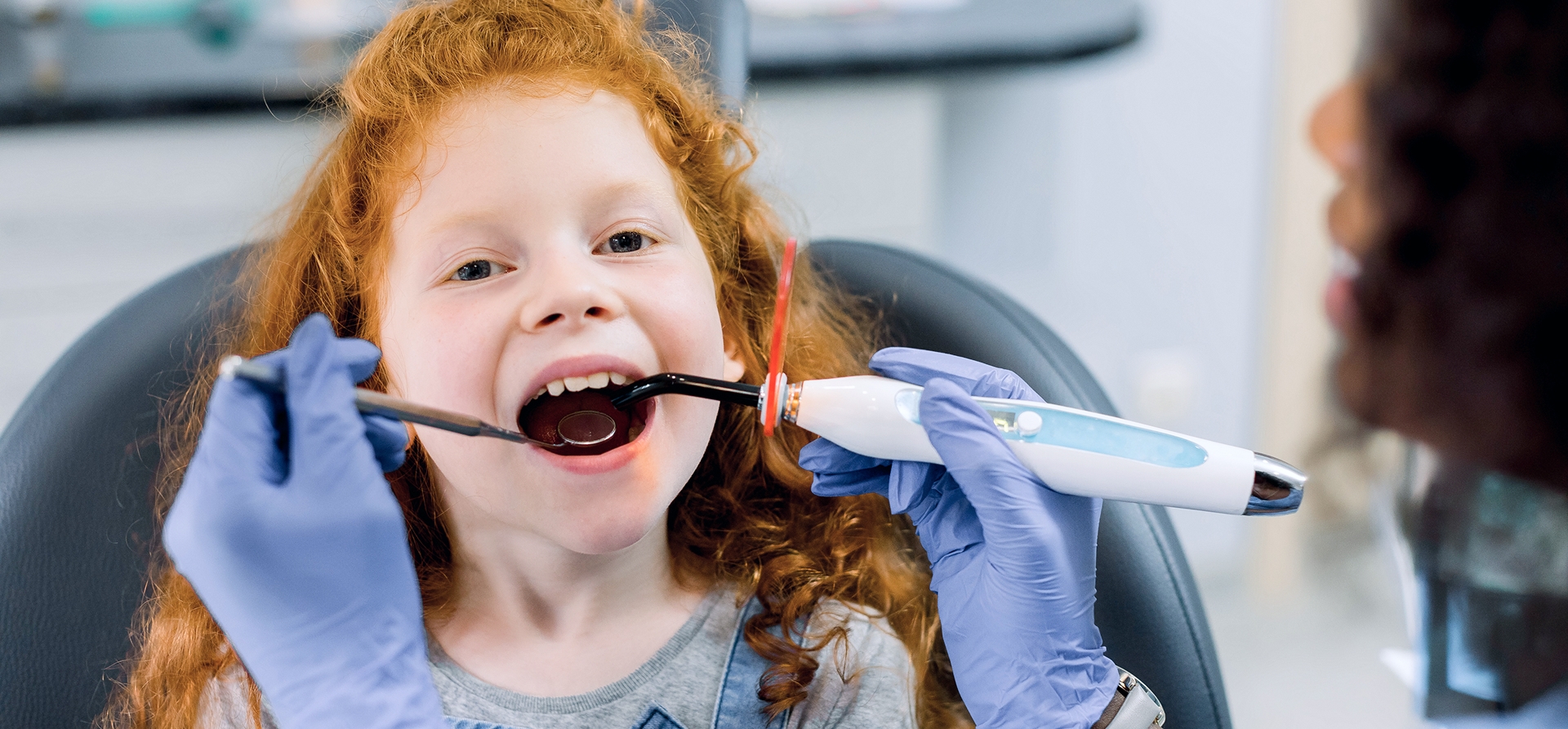
All clear is the most common one — the bite is developing fine, and you go home with reassurance and a normal recheck rhythm. Watch is the second: something's worth tracking, growth may solve it or clarify it, and we set a specific interval instead of a vague “we'll see.” Act is the third and rarest: the timing is right for treatment — Spark clear aligners when the case genuinely fits them, or a referral to an orthodontic specialist for braces-level work, timed to when it helps most.
Whichever answer your child gets, it comes with the reasoning attached — and if a referral is the path, we coordinate it and stay your child's dental home the whole way through.
Our office recommends a first screening around age seven — and sooner if something catches your eye or ours. Age seven is when the story becomes readable: the first permanent molars and front teeth are arriving, baby and permanent teeth begin sharing the mouth, and jaw growth patterns start showing their hand. A screening then catches developing problems in the window where small moves work best. And if your child is eight, ten, or twelve and has never had one? No guilt, no lecture — the best screening is simply the next one, and plenty of first screenings at those ages still end in “all clear.”
Most don't — and we'll say that as often as it's true. The screening's whole job is sorting: the majority of kids get reassurance or a watch interval, because growth handles more than parents fear. Early treatment earns its place in the minority of situations where acting during growth genuinely beats waiting — certain crossbites, space problems, and eruption traffic jams where timing is the treatment. If your child is in that minority, you'll hear the specific why, the specific window, and the right-fit path — never a blanket “everyone should start early,” because that isn't true and we don't sell it.
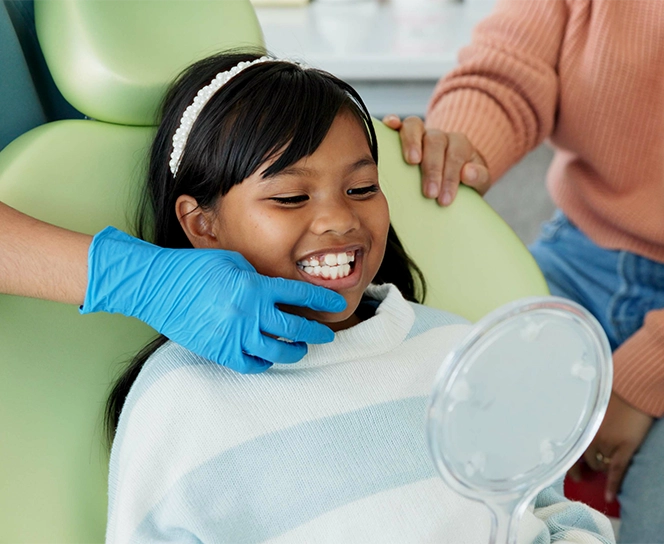
Development gets watched continuously at the visits your child already has — the always-on radar.
Cleanings & Exams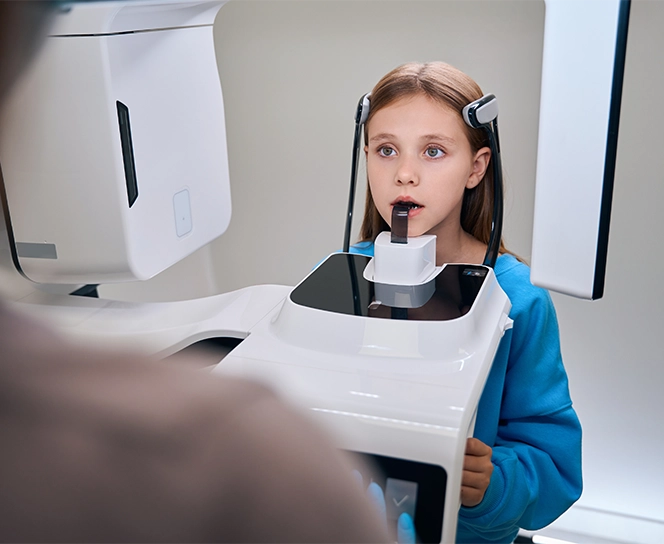
The focused sit-down evaluation — this page — when age says it's time or the radar catches something.
Book a Screening
Aligners here when a case fits them; specialist referral for braces-level work — the full honest story lives on our orthodontics page.
Orthodontic Care
That crooked-tooth double-take is how half of all screenings start. Bring the worry in — one focused visit beats years of wondering, and whatever the answer is, you'll have it in plain English before you leave.


01
The Conversation
Your observations first: what you've noticed, habits past and present, and any family history of crowding or bite quirks.
02
The Focused Look
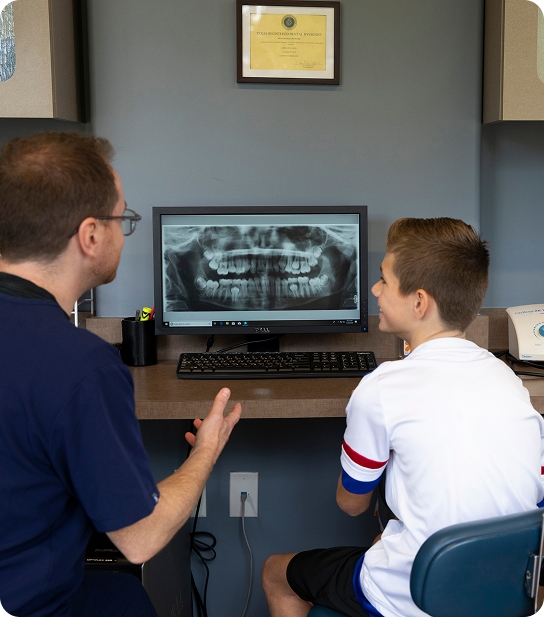
Dr. Brock evaluates the bite from the front and sides, reads crowding and spacing, tracks eruption against your child's age, and checks jaw growth and symmetry — with digital X-rays when they're genuinely indicated.
03
The Read, Shown
You see what we see, on the screen and in the mirror, explained in plain English while your child is still in the chair.
04
The Answer
All clear, watch with a specific interval, or act with a specific path. Nothing vague leaves the room.

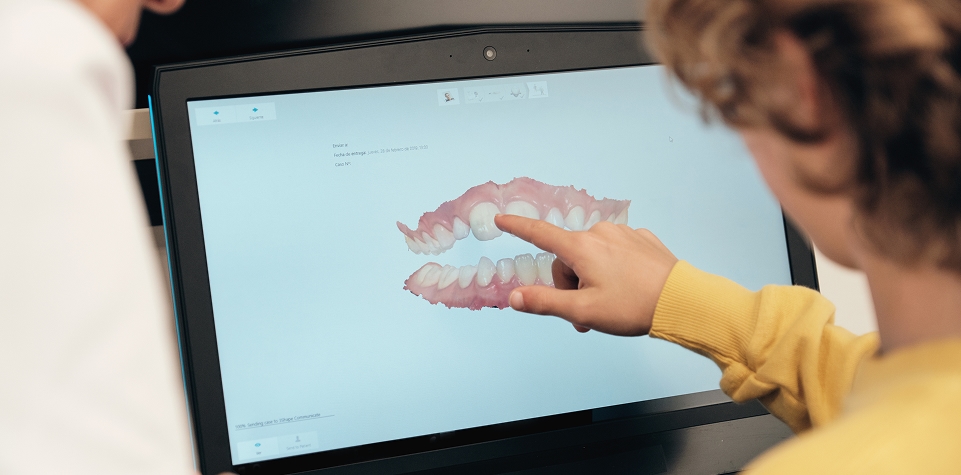
Every family leaves with the read in plain terms and the plan that matches it. If the answer is "watch," you'll know exactly what we're watching and when we'll look again — a date, not a shrug. If the answer is "act," the next step is already mapped: an aligner evaluation here, or a coordinated referral with the timing explained. And if there's homework — usually a habit nudge or an eruption to keep half an eye on — it comes sized for real life.
The standing invitation matters too: bites change between appointments, and new worries are welcome anytime. A photo and a phone call are often enough for us to say "relax" or "come in" — both answers are free.
How a screening is scheduled — alongside a regular visit or as its own focused appointment — shapes how it's handled, and we'll tell you exactly what to expect before you book. Any treatment that follows comes with its own honest estimate first, always.
One thing worth knowing: orthodontic benefits vary more than almost any other corner of dental insurance. We're in-network with many major PPO plans and verify your benefits before your visit, so you'll know precisely where your plan stands. Families without insurance can see our membership plan and insurance and payment page.

Pediatric Dentist • 4.9 • 211 reviews

2 days ago
Dr Brock and staff are just fabulous, honest and efficient!
2 weeks ago
Both my boys have been going to Dr. Brock for many years. He is very thorough and his staff is amazing. Definitely recommend Big Picture Dentistry.
2 weeks ago
I've been going here for years, they are incredibly friendly and informative.
Our office sits at 17150 El Camino Real, Houston, TX 77058 — on the El Camino Real corridor in the Clear Lake area, near NASA Parkway and Bay Area Boulevard, with easy ground-floor access. We schedule Monday through Friday until 4:30pm.
Nobody sees your child's bite more often than their dental home — and Dr. Jason Brock believes the best orthodontic outcomes start with somebody watching early, honestly, and without a sales quota.
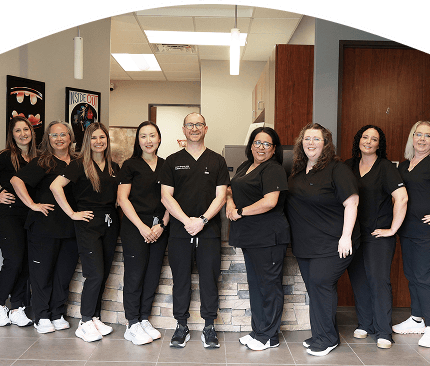
The watching is — bite and alignment get a look at every routine visit, which is the always-on radar. The screening is what happens when the radar or the calendar says it's time: a focused, sit-down evaluation that goes deeper, reads eruption against age, weighs jaw growth, and ends in an explicit answer rather than a passing glance. Think of checkups as the smoke detector and the screening as the walkthrough.